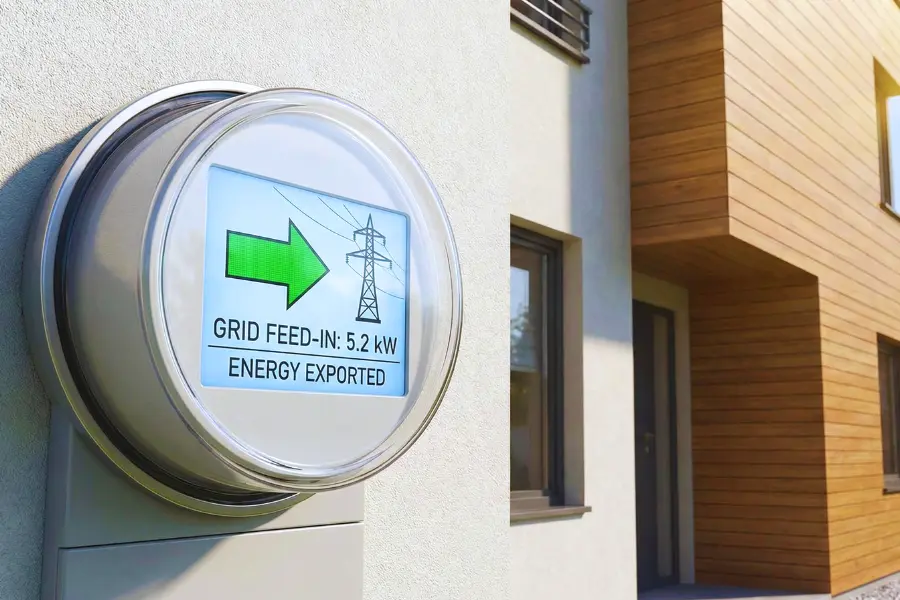
For decades, “Net Metering” was the golden rule of solar economics. It was a simple deal: for every kilowatt-hour (kWh) of solar energy you sent back to the grid, the utility company gave you a 1-for-1 credit. It was like using the grid as a free battery.
In 2026, that era is officially over in California, and many other states are following suit. The new policy, known as NEM 3.0 (Net Energy Metering 3.0), drastically changes the math for homeowners.
What Changed? (The 75% Cut)
Under the old rules (NEM 2.0), if you exported electricity during the day, you were paid the full retail rate (e.g., $0.30/kWh). Under NEM 3.0, the export rate is no longer based on retail price but on “Avoided Cost”—essentially the wholesale value of electricity.
This means the credit for exported solar has dropped by approximately 75%. Instead of getting $0.30 for your excess power, you might get $0.05 to $0.08.
Why Did They Do This?
Utility companies (like PG&E and SCE) argued that paying retail rates for solar exports was a subsidy paid for by non-solar customers. They claimed that the grid is flooded with cheap solar power during the day (the “Duck Curve”) and what they really need is power in the evening.
The Solution: Batteries Are No Longer Optional
NEM 3.0 was designed to incentivize battery storage. If you install a battery (like a Powerwall) along with your panels, the economics flip back in your favor.
The “Self-Consumption” Strategy
With a battery, you don’t send your cheap excess power to the grid during the day. Instead, you store it. Then, during the evening peak hours (4 PM – 9 PM) when electricity is most expensive, you power your home from your battery. This allows you to bypass the poor export rates entirely.
Is Solar Still Worth It Under NEM 3.0?
Yes, but the system design must change. In the past, the goal was to cover 100% of your usage with panels. Now, the goal is to optimize for self-consumption. Solar + Storage is the new standard.
While the upfront cost is higher (due to the battery), the long-term savings are still massive compared to paying utility rates that continue to rise by 8-10% annually.
What About Other States?
California is often the trendsetter. States like Arizona, Nevada, and Hawaii have already implemented similar reductions. If you live in a state that still offers 1-for-1 Net Metering (like New Jersey or Illinois), you should go solar immediately to get “grandfathered” into the old rules before they change.
Disclaimer
Policy details vary by utility company. Check with your local provider to confirm their current Net Metering rates and grandfathering clauses.