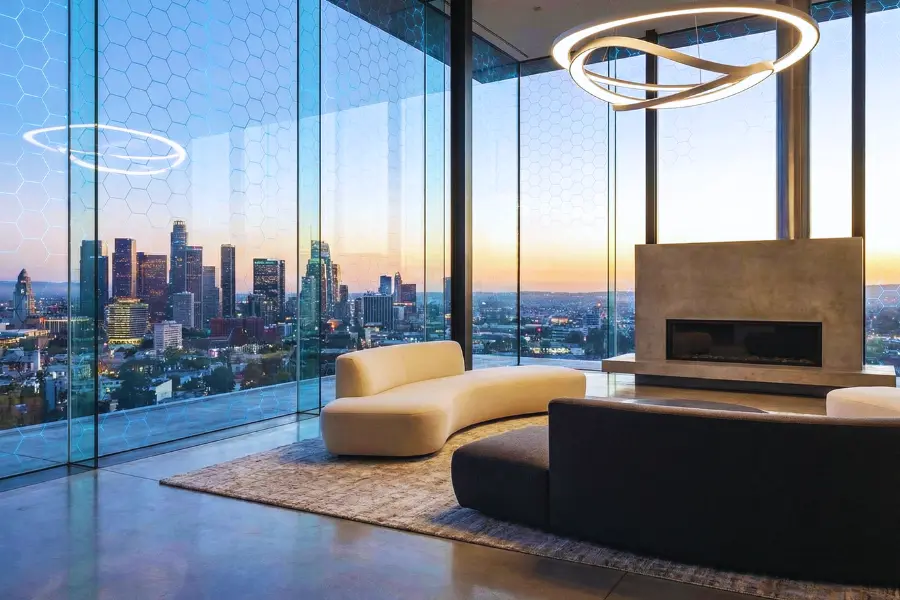
For decades, solar panels have looked the same: dark blue or black rectangles that sit on top of a roof. But what if the building materials themselves—the windows, the siding, the paint—could generate electricity? This concept is called BIPV (Building-Integrated Photovoltaics), and the “Holy Grail” of this field is transparent solar glass.
In 2026, companies like Ubiquitous Energy and NEXT Energy Technologies are finally moving this tech from the university lab to commercial production. But is it ready for your living room?
How Does It Work? (The Physics)
It sounds impossible: How can a window let light through and absorb light to make energy? Solar panels usually need to absorb light (which makes them dark).
The Magic of Selective Absorption
The breakthrough lies in “selective absorption.” These new transparent cells are designed to let visible light pass through (so you can see out) while absorbing only the Ultraviolet (UV) and Infrared (IR) light spectrums. Since roughly 50% of the sun’s energy is in these invisible spectrums, there is plenty of power to harvest without blocking your view.
The Efficiency Problem
Here is the catch. Traditional silicon roof panels have an efficiency of around 22-24%. Transparent solar glass currently hovers around 5% to 8% efficiency.
Current Efficiency Comparison (2026)
This means a square foot of solar glass generates significantly less power than a square foot of roof panel. However, skyscrapers have thousands of square feet of glass and very little roof space. For a tall building, the vertical glass surface area is huge, making the lower efficiency acceptable.
In dense cities like Tokyo or Manhattan, rooftop solar is useless because the roof is small and shaded. Solar windows turn the entire façade of a building into a power plant.
Cost and Availability
Currently, transparent solar glass is a premium product aimed at commercial skyscrapers and luxury eco-homes. It costs roughly 20-30% more than standard high-efficiency architectural glass.
For the average homeowner, replacing your existing windows with solar glass is not yet cost-effective compared to putting panels on the roof. The ROI just isn’t there yet. However, for new construction of large office buildings, the math is starting to pencil out.
Conclusion: Not Yet, But Soon
While you probably won’t be buying solar windows at Home Depot this year, the technology is advancing rapidly. By 2030, it is predicted that “power-generating glass” will be a standard code requirement for all new commercial high-rises.
Tech Watch Disclaimer
This article explores emerging technology. Availability and pricing are subject to rapid change as manufacturing scales up.