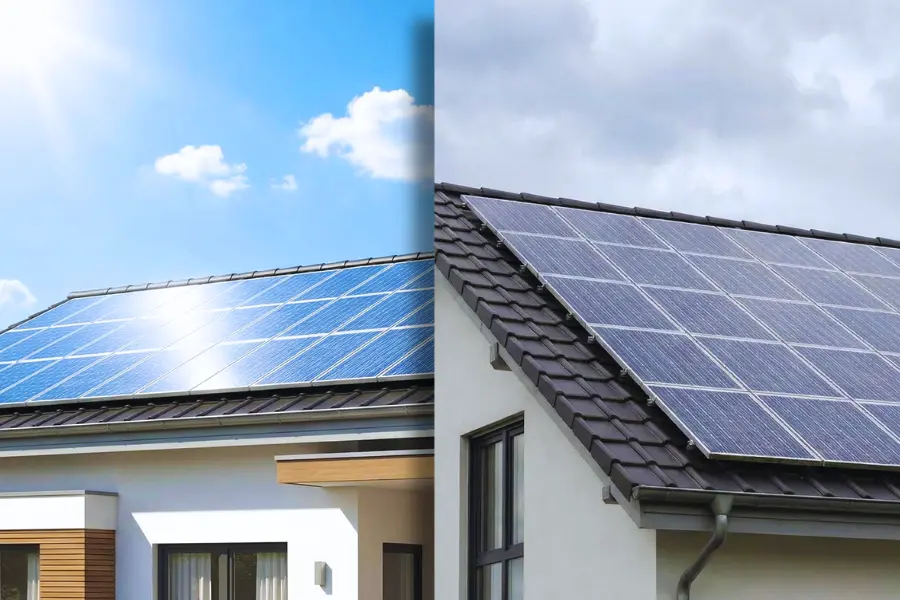
Browse any solar company’s website, and you will see pictures of happy families, green fields, and promises of zero-dollar electric bills. While solar energy is a fantastic technology that saves millions of Americans money every year, it is not a magic wand without flaws.
As an unbiased educational resource, our job at CalcMySolar is to give you the full picture—the good, the bad, and the ugly. Before you sign a 25-year contract, you need to be aware of the potential headaches that can come with rooftop solar.
1. The Aesthetics: Curb Appeal Risks
Let’s be honest: not all solar installations look like the sleek Tesla marketing photos. If you have a complex roof with many vents, chimneys, and dormers, the panels might be arranged in a chaotic, disjointed pattern that some find unsightly.
Furthermore, nearly all installations require electrical conduit (pipes) to run from your roof down to your meter. Lazy installers will run silver metal pipes right across the front of your house.
2. Roof Leaks and Damage
Installing solar involves drilling dozens of holes into your roof to bolt down the racking system. While professional installers use high-grade flashing to seal these penetrations, mistakes happen. A poorly installed system on an old roof is a recipe for disaster.
3. Complications When Selling Your Home
This is the biggest hidden downside. While owning solar (cash/loan) generally increases home value, leasing solar can kill a real estate deal.
If you have a PPA or Lease, the buyer of your home must agree to assume that lease. If they don’t like the terms, or if they have poor credit and don’t qualify, the deal falls through. We have seen many homeowners forced to pay $20,000 to buy out a lease just to close the sale of their house.
4. It Doesn’t Work During Blackouts (Usually)
Many people assume that because they have solar, they will have power when the grid goes down during a storm. This is false.
For safety reasons (to protect line workers), standard grid-tied solar inverters automatically shut off when they detect a power outage. Unless you spend an extra $10,000+ on a battery backup system (like a Powerwall), your panels are just expensive roof ornaments during a blackout.
5. Insurance Premium Increases
Adding $30,000 worth of glass to your roof increases the replacement cost of your home. You must notify your homeowner’s insurance provider. While most policies cover solar, some may raise your annual premium by $50 – $100. It’s a small cost, but it eats into your projected savings.
Conclusion: Is It Still Worth It?
Despite these downsides, for 90% of homeowners, the math still works in favor of solar. The key is to own the system (avoid leases), install on a good roof, and hire a reputable local installer rather than a national door-knocking giant. Being aware of the risks allows you to mitigate them.
Disclaimer
The information provided here is based on industry observations and consumer reports as of 2026. Individual experiences may vary. Always read your contract’s “warranties” and “transferability” clauses carefully.