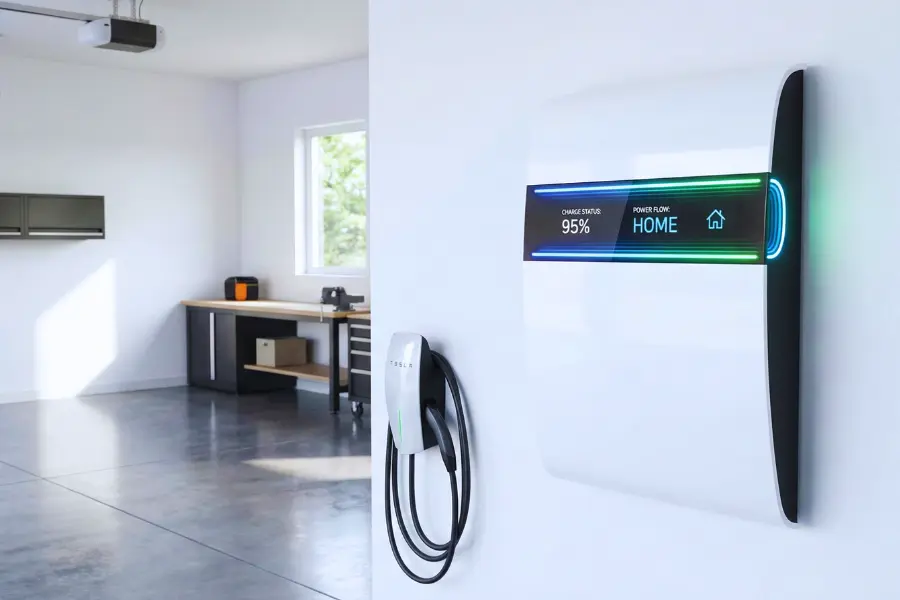
In the world of home energy storage, one name dominates the conversation: Tesla. Since the launch of the original Powerwall in 2015, Elon Musk’s company has set the standard for what a home battery should look like and how it should perform. Now, with the rollout of the Powerwall 3 in full swing across the US market, homeowners are asking: Is it really the best option, or is it just excellent marketing?
The energy landscape of 2026 is vastly different from a few years ago. With utility companies in California (NEM 3.0) and other states slashing the rates they pay for solar exports, storing your own energy has shifted from a “luxury backup” to a financial necessity. We tested the Powerwall 3 against its main rival, the Enphase IQ Battery 5P, to see which delivers better value.
What’s New in Powerwall 3?
The biggest architectural change in the Powerwall 3 is the integration of the solar inverter. Unlike its predecessor (Powerwall 2), which was an AC-coupled battery that could be added to any existing solar system, the Powerwall 3 is a hybrid DC-coupled unit with a built-in solar inverter.
This means if you are installing a new solar system, you don’t need to buy a separate inverter. The Powerwall 3 handles everything. This simplifies installation, reduces the number of boxes on your wall, and slightly improves efficiency by reducing AC-to-DC conversion losses.
Key Specifications (2026 Model)
| Feature | Tesla Powerwall 3 | Enphase IQ Battery 5P |
|---|---|---|
| Usable Capacity | 13.5 kWh | 5.0 kWh (Modular) |
| Continuous Power | 11.5 kW (On-Grid) | 3.84 kW |
| Chemistry | LFP (Lithium Iron Phosphate) | LFP (Lithium Iron Phosphate) |
| Warranty | 10 Years / 70% Capacity | 15 Years / 60% Capacity |
The Price Tag: Is It Affordable?
As of Q1 2026, the direct price of a single Tesla Powerwall 3 unit is approximately $8,400 (hardware only). However, installation is never free. A full turnkey installation typically costs between $12,000 and $15,000 before incentives.
Remember, this hardware qualifies for the 30% Federal Tax Credit. So, a $14,000 installation would have a net cost of $9,800. Compared to buying a standalone generator (which requires fuel and maintenance), the Powerwall offers a silent, automated solution that pays for itself over time by engaging in “Time-of-Use” arbitrage.
The Good
- Integrated Inverter: Saves money on new installs.
- High Power Output: 11.5 kW is enough to start most central AC units.
- The App: Tesla’s software interface remains the best in the industry.
The Bad
- Not Modular: You have to buy in 13.5 kWh chunks. If you only need 5 kWh, tough luck.
- Customer Service: Tesla is notorious for poor post-installation support compared to local installers.
Verdict: Who Should Buy It?
The Tesla Powerwall 3 is the undisputed champion for homeowners installing a brand new solar system who want a simple, all-in-one aesthetic and need to back up heavy loads like air conditioners or well pumps. Its power output is unmatched at its price point.
However, if you already have solar panels installed with microinverters (like Enphase IQ8), ripping them out to install a Powerwall 3 doesn’t make financial sense. In that case, adding an AC-coupled battery like the Enphase IQ Battery 5P or the FranklinWH is a smarter, more compatible choice.
Tech Review Disclaimer
This review is based on technical specifications and market data available as of January 2026. CalcMySolar has no financial affiliation with Tesla, Enphase, or any battery manufacturer. We do not sell hardware. Performance may vary based on your home’s electrical setup and climate.