
Going solar in 2026 is more accessible than it has ever been — but "accessible" and "cheap" are two very different things. Before you sign a single contract, you deserve a straight, honest look at what a residential solar installation actually costs, why the price is what it is, and what factors could push your specific number meaningfully higher or lower than whatever figure you saw in a Google ad last week.
I've been in and around residential solar since earning my NABCEP certification, spending years on rooftops from Phoenix to the Carolinas before shifting into education and writing. The single most common question homeowners ask — before anything else — is some variation of: "What am I actually going to pay?" That's what this guide is here to answer.
The short version on what you can expect to pay
According to EnergySage, a solar marketplace that aggregates real installer quotes from across the country, a typical American homeowner is looking at somewhere between $15,000 and $30,000 before incentives for a standard residential system. For a 10 kW system — large enough to cover a moderate-to-large home's electricity needs in most US climates — the pre-incentive cost currently sits in the range of $25,000 to $35,000, based on national pricing data from solar.com and SolarReviews. After applying the federal solar Investment Tax Credit (ITC), that number drops considerably, but the exact benefit depends on your personal tax liability.
Why these numbers vary so much
No two solar quotes are the same, because no two homes, roofs, or energy profiles are identical. The size of the system you need, the type of inverter selected, your roof's pitch and material, your local permitting costs, and even the size of your installer's marketing team all fold into that final contract number. That's precisely why using a personalized resource like the free Solar Calculator at calcmysolar.com is so valuable — it accounts for your specific usage and location rather than pointing you at a national average that may be nowhere near your real situation.
What this guide covers
Over the following sections, we'll unpack the price-per-watt metric that lets you compare any two bids on equal footing, break down what solar actually costs in ten key US states for a 10 kW system, pull back the curtain on exactly where your money goes inside a solar proposal, and walk through the hidden costs that rarely show up in installer quotes but absolutely affect your total investment. Let's get into it.
THE "PRICE PER WATT" METRIC EXPLAINED
When you start comparing solar quotes, you'll encounter the term "price per watt" almost immediately. It's the solar industry's universal pricing benchmark, and understanding it will immediately sharpen your ability to evaluate competing bids and walk away from inflated ones.
What price per watt actually means
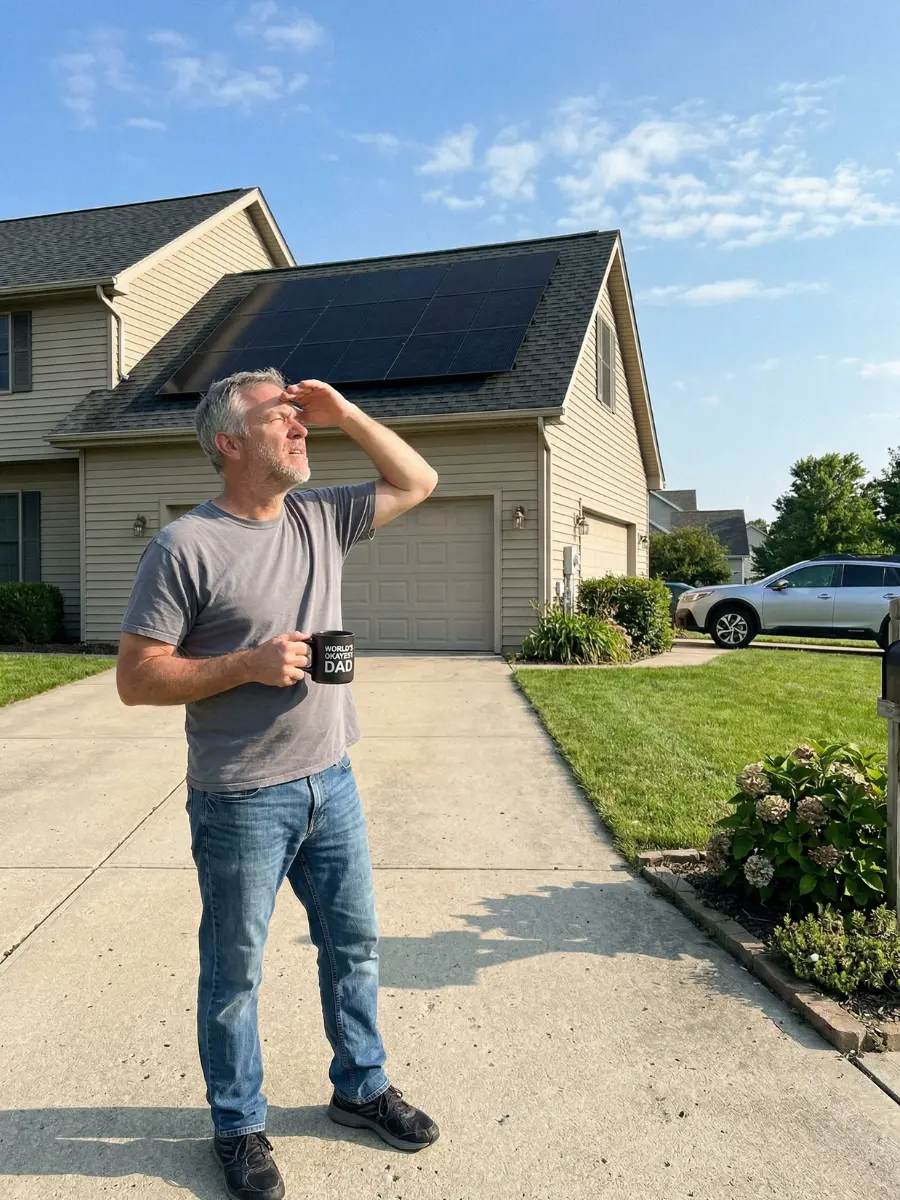
Price per watt ($/W) is calculated by dividing the total system cost by the total installed system capacity in watts. If a contractor quotes you $28,000 for an 8 kW (8,000 watt) system, the price per watt is $28,000 ÷ 8,000 = $3.50/W. This single number lets you compare proposals on equal footing regardless of system size — stripping away the confusion that comes from comparing a $20,000 quote to a $35,000 quote when the systems aren't the same size to begin with.
Where the national average stands in 2026
According to SolarReviews, the national average cost per watt for residential solar installations in 2026 is approximately $3.03. EcoFlow's 2026 installation pricing guide places the installed average at $2.75 to $3.25 per watt, while solar.com's 2026 pricing guide reports a broader range of $2.50 to $3.50 per watt depending on location and system configuration. As a practical working benchmark, $2.75 to $3.25 per watt is realistic for most American homeowners in most markets this year — anything significantly above $3.50/W deserves a clear explanation from the installer.
How system size drives total cost
The table below illustrates how national average price-per-watt figures translate to real-dollar costs at several common system sizes, and what the numbers may look like after applying the federal 30% Residential Clean Energy Credit. Please verify the current rate at energystar.gov or irs.gov, as incentive percentages may change. These are estimated ranges based on aggregated national pricing data from SolarReviews and EnergySage, and your specific costs will vary based on your location, roof type, and chosen equipment.
| System Size | Estimated Pre-Incentive Cost | Estimated After 30% ITC | Approx. Annual Production (US Avg.) |
|---|---|---|---|
| 4 kW | ~$11,000 – $14,560 | $7,700 – $10,192 | 4,800 – 6,000 kWh |
| 6 kW | $16,500 – $20,000 | $11,550 – $14,000 | 7,200 – 9,000 kWh |
| 8 kW | $22,000 – $28,000 | $15,400 – $19,600 | 9,600 – 12,000 kWh |
| 10 kW | $27,500 – $35,000 | $19,250 – $24,500 | 12,000 – 15,000 kWh |
| 12 kW | $33,000 – $42,000 | $23,100 – $29,400 | 14,400 – 18,000 kWh |
Estimates compiled from SolarReviews, EnergySage, and solar.com (2026). Actual costs and energy production vary by location, equipment, shading, and roof orientation. Annual production figures assume average US peak sun hours. ITC percentage must be verified at irs.gov, as legislative conditions may change.
The long-term price trend still favors buyers
According to the Solar Energy Industries Association (SEIA), the cost of solar has declined by more than 90% over the past two decades. A system that cost $8 to $9 per watt to install in 2008 now runs a fraction of that. The steep annual price drops of the early 2010s have largely plateaued, but the direction is still broadly downward as manufacturing scales, installer competition intensifies in mature markets, and equipment efficiency continues to improve incrementally each year.
What a "good" price per watt looks like in your region
Geography matters enormously. If you're in Arizona or Nevada — two of the most competitive solar markets in the country, with high sun hours and a dense installer network — you might realistically see bids closer to $2.30 to $2.65 per watt, according to solarquestai.com's 2026 state pricing guide. If you're in Massachusetts or Connecticut, where electrical permitting is more complex and labor costs are higher, $3.30 to $3.60 per watt is not unusual. This regional spread is entirely normal and reflects the genuine cost structure of operating in those markets — it's not simply markup
Understanding cost efficiency at scale
Like most large purchases, solar panels benefit from economies of scale at the system level. A 12 kW system doesn't cost exactly twice what a 6 kW system costs, because the fixed costs of the project — design, permitting, project management, a certain portion of the electrician's labor — are spread across a larger installation. This is one reason why price-per-watt tends to drop slightly as system size increases, as seen in the table above. If your roof and budget allow, sizing up slightly can sometimes offer better overall cost efficiency.
STATE-BY-STATE COST BREAKDOWN (10KW SYSTEM)
A 10 kW solar system is a practical and commonly quoted benchmark — it's the right size range for a 2,000 to 3,000 square foot home with average to above-average energy consumption in most US climates. The table below shows estimated installation costs for a 10 kW system across ten key US states, along with estimated payback periods based on local electricity rates and incentive environments. These figures are compiled from EnergySage, SolarReviews, ElectricChoice, and state-specific pricing data for 2026, and represent estimates only.
| State | Avg. Cost/Watt | 10 kW Before ITC | After 30% ITC | Est. Payback Period |
|---|---|---|---|---|
| California | ~$3.00/W | ~$30,000 | ~$21,000 | 5–7 years |
| Texas | ~$2.70/W | ~$27,000 | ~$18,900 | 8–11 years |
| Florida | ~$2.80/W | ~$28,000 | ~$19,600 | 8–10 years |
| Arizona | ~$2.80/W | ~$28,000 | ~$19,600 | 7–9 years |
| New York | ~$3.10/W | ~$31,000 | ~$21,700 | 6–8 years |
| Massachusetts | ~$3.30/W | ~$33,000 | ~$23,100 | 5–7 years |
| Colorado | ~$3.20/W | ~$32,000 | ~$22,400 | 7–9 years |
| Ohio | ~$3.00/W | ~$30,000 | ~$21,000 | 9–12 years |
| New Jersey | ~$2.90/W | ~$29,000 | ~$20,300 | 6–8 years |
| Illinois | ~$3.10/W | ~$31,000 | ~$21,700 | 8–10 years |
Estimates compiled from EnergySage, SolarReviews, ElectricChoice, and solarquestai.com (2026). Payback periods assume the 30% federal ITC is fully applied and do not account for state-specific rebates, which may shorten payback considerably. Verify current ITC rates at irs.gov before making financial projections.
Why California has a faster payback despite higher costs
You might notice that California's estimated payback period is shorter than Texas, even though California installations tend to cost more per watt. That's because California's retail electricity rates — averaging over 31 cents per kWh according to ElectricChoice — are among the highest in the nation. Every kilowatt-hour your panels produce is a kilowatt-hour you're not buying at that steep rate. Higher utility costs shorten payback periods, which is exactly why high-electricity-cost states like Massachusetts and New York consistently rank among the top states for solar financial returns, even when installation prices are also elevated.
The sun-rich states aren't always the slam-dunks you'd expect
Arizona sits near the top of most "best states for solar" lists, and its peak sun hours — up to 6.5 hours per day, according to ElectricChoice's data — are genuinely exceptional. But Texas, also a sun-rich state, has comparatively lower electricity rates and less robust statewide incentive programs than the Northeast corridor. That combination pushes payback periods toward the longer end, even in a market with excellent solar resources. The financial math isn't just about sunshine — it's sunshine multiplied by your local electricity rate, which makes the latter arguably the more important variable.
State incentives can shift these numbers substantially
Several states offer programs that go well beyond the federal ITC. New York's NY-Sun initiative provides additional rebates and low-interest financing options, according to nedes.us's 2026 state incentive guide. New Jersey maintains one of the country's more active solar renewable energy certificate (SREC) markets. Massachusetts runs the SMART (Solar Massachusetts Renewable Target) program, which provides ongoing payments for solar generation. These programs are not permanent and can change or reach funding caps — always verify current availability at the Database of State Incentives for Renewables & Efficiency at dsire.org
Your personalized baseline before any quote
If you want to take your first informed step toward understanding what a solar system might cost for your specific home — before contacting a single installer — the free Solar Calculator at calcmysolar.com can generate a rough estimate based on your state, home size, and electricity usage. It won't replace a professional roof assessment and site survey, but it gives you a credible starting point before you enter the bidding process and need to evaluate whether a quote is in the right neighborhood. For ongoing coverage of solar market trends, incentive updates, and installation guides across all US states, the CalcMySolar Blog is a regularly updated resource worth bookmarking.
WHERE DOES YOUR MONEY GO? THE HARD TRUTH
This is the section most solar articles gloss over or skip entirely. Understanding where your installation dollars actually land — category by category — gives you the knowledge to ask better questions, recognize inflated proposals, and negotiate from a position of information rather than blind trust.
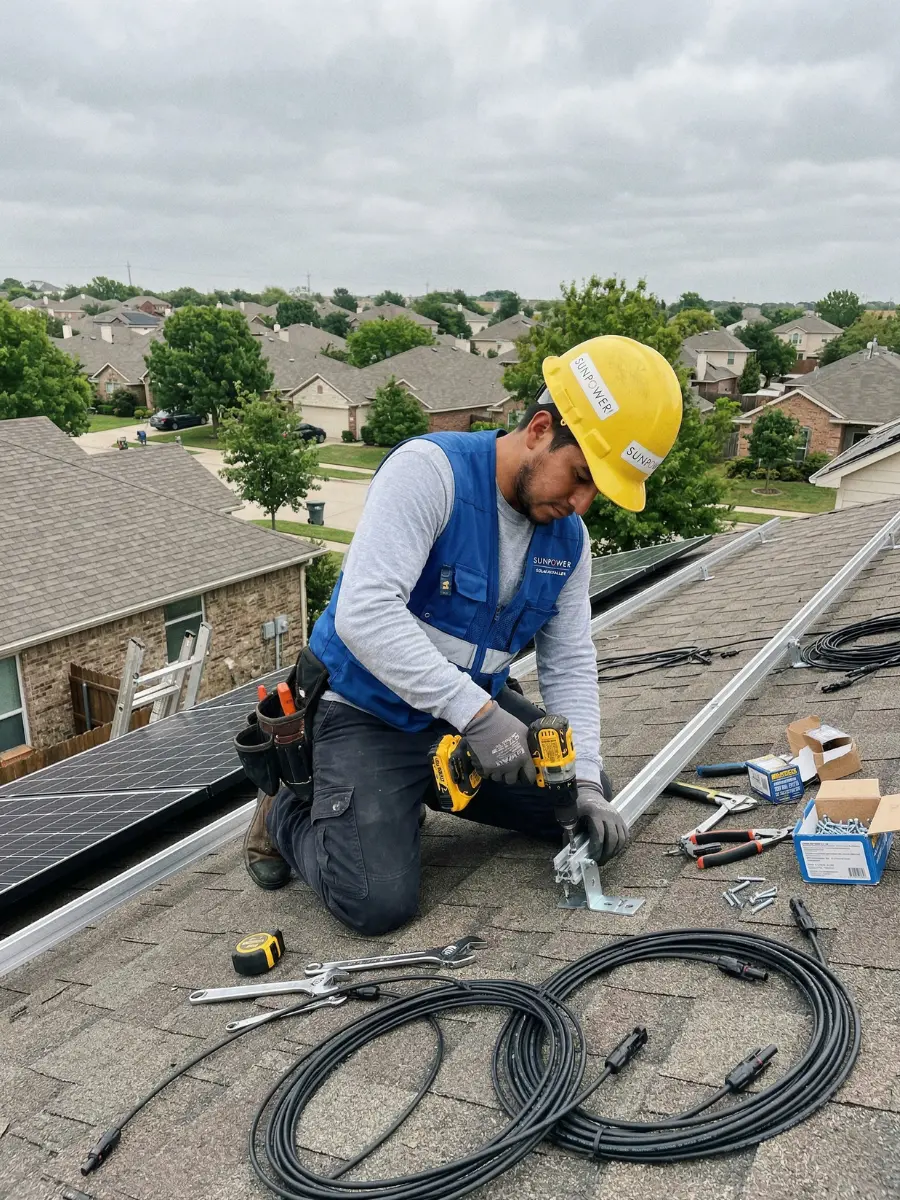
The three-bucket framework Every dollar in a solar installation flows into one of three broad categories: hardware, labor and physical installation, and what the industry calls "soft costs" — a bucket that includes sales, marketing, permitting, overhead, and installer profit. According to EnergySage's detailed cost analysis of installer quotes, these three categories break down roughly into 45%, 20%, and 35% respectively in 2026. Each is worth examining honestly.
Hardware (45%)
Panels, inverters, and racking — the components you can actually seeHardware represents roughly 45% of a typical residential solar installation cost in 2026, based on aggregated data from EnergySage and a1solarstore.com. That 45% covers the solar panels themselves, the inverter system (which converts the direct current your panels generate into the alternating current your home's circuits use), the racking and mounting hardware that secures everything to your roof structure, and the balance-of-system components including electrical wiring, conduit, junction boxes, and safety disconnects.
Solar panels cost less than most homeowners assume. According to EnergySage's breakdown of installer costs, the panels themselves account for only about 12% of total system cost — not the majority, as most people assume before they see the numbers. This surprises almost every homeowner I've talked through a proposal with. The panels are a real line item, certainly, but they're not what makes your quote expensive. It's all the other stuff stacked on top.
Inverter technology meaningfully affects cost and long-term performance Inverters — the devices that perform the DC-to-AC conversion — typically account for around 10% of total system cost, according to EnergySage. The two main residential options are string inverters (one central unit for the entire array) and microinverters (one compact unit mounted behind each individual panel). Microinverters typically cost more upfront but can deliver better performance on complex roof layouts, partially shaded roofs, or systems likely to be expanded in the future. Your installer should walk you through which option makes more sense given your specific roof geometry and local shading conditions.
Labor & Installation (20%)
The work of actually getting it onto your roof and into your panel. Labor and installation account for roughly 20% of total solar installation cost, according to cost data from anernstore.com's 2025 breakdown. This category covers the installation crew, the licensed electrician who connects your system to your home's main electrical panel and the utility grid, roof penetrations and sealing, wire runs through walls and attic spaces, the mounting of the inverter and associated disconnects, and the final system commissioning and inspection walkthrough.
Labor costs vary significantly by region and roof complexity. A straightforward south-facing, single-pitch composition shingle roof in a competitive labor market might run $3,000 to $4,000 in labor. A steep metal roof in a high-cost-of-labor urban market with a multi-angle layout, difficult access, or an older home requiring electrical upgrades can push that number substantially higher, according to anernstore.com's cost data. When comparing bids, confirm explicitly what the labor line item covers — does it include the utility interconnection application? Does it cover a structural engineer's letter if your jurisdiction requires one? These details matter.
Permitting adds both cost and time. Permit and inspection fees are typically classified within the labor and installation cost bucket, and they're routinely underestimated by homeowners doing preliminary research. According to community.powmr.com's 2026 pricing analysis, permitting fees can represent approximately 8% of total installation cost. But as GreenLancer's solar permitting guide notes, the larger hidden cost of permitting is often time — delays between permit approval and system activation can stretch weeks or even months in some jurisdictions, during which your utility bills continue at full rate. Always ask your installer about the typical permitting timeline with your specific city or county.
Customer Acquisition & Overhead (35%)
The number that tends to make homeowners pause. Soft costs — covering sales commissions, marketing spend, overhead, and installer profit margin — account for roughly 35% of a typical residential solar installation in 2026, based on EnergySage's cost analysis. For a $30,000 system, that's approximately $10,500 going toward the business of selling and running a solar company, not toward hardware or roof labor. This is not unique to solar; it mirrors the cost structure of most specialty home improvement contracting. But solar's soft cost ratio is notably higher than most.
Sales and marketing alone account for a striking share. According to EnergySage's data, sales and marketing represent approximately 18% of total system cost — more than the panels themselves. This reflects the reality that solar is still a high-consideration, high-dollar purchase requiring substantial lead generation, digital advertising, in-home consultations, and a commission-based sales force. Large national installers in particular carry enormous customer acquisition costs. Regional and local installers sometimes — though not always — run leaner on this front, which can translate to lower quotes for comparable equipment and labor.
Overhead and profit are normal and necessary. Installer overhead (office staff, software subscriptions, fleet vehicles, insurance premiums, licensing fees) and profit margin together account for the remaining portion of soft costs, per EnergySage's breakdown. This is entirely standard for a contractor-based industry and doesn't automatically signal a bad deal. A reasonable profit margin is what keeps quality installers financially healthy enough to honor the 10-year labor warranties they're putting in writing on your contract. What you're evaluating isn't whether a company makes money — it's whether the total package is competitive for your market.
HIDDEN COSTS YOU MIGHT NOT EXPECT
The number on your solar proposal rarely captures the full financial picture of a real installation. There are several additional costs that can appear before, during, or after your panels go up — and knowing about them now is significantly better than discovering them on installation day.
- Roof condition and age: This one catches more homeowners off guard than almost anything else in the solar process. If your roof is more than 10 to 15 years old, or has existing damage, most reputable installers will either require that you address roofing issues first or factor the risk into their proposal. According to This Old House's solar cost guide, removing and reinstalling solar panels during a future roof replacement can add $1,000 to $3,000 or more to that roofing project. If your roof is nearing end-of-life, it often makes financial sense to replace it before going solar — and that cost should be factored into your total investment calculation from the beginning.
- Electrical panel upgrades: Older homes — particularly those built before the 1990s — may have main electrical service panels that are undersized or incompatible with the requirements of a solar interconnection. A panel upgrade can run anywhere from $1,500 to $4,000 depending on your existing wiring infrastructure and local code requirements. This cost is sometimes included in installer proposals and sometimes listed as a contingent add-on. Ask explicitly whether your existing panel has been assessed during the quoting process and whether an upgrade is considered likely given your home's age and current service size.
- HOA review fees and aesthetic compliance costs: If you live in a neighborhood governed by a Homeowners Association, you may face a separate approval layer before installation can begin. According to sunstra.com's guide to hidden installation costs, HOA review fees can range from $50 to $500, and some associations require specific panel placement, color matching, or aesthetic screening measures that can add hundreds or even thousands of dollars to a project. Most US states have solar access laws that limit an HOA's ability to outright prohibit solar installations, but those laws don't eliminate the costs associated with compliance. Check your HOA documents and local regulations before assuming approval will be automatic.
- Tree trimming and shading remediation: A solar system underperforming due to shading is one of the most common sources of post-installation frustration. If trees on your property — or on a neighbor's property — cast significant shadow across your array between 9 AM and 3 PM solar time, those shadows will meaningfully cut into your system's production and extend your payback period. Tree removal or significant trimming can range from a few hundred to several thousand dollars depending on the size and number of trees involved, and it's a cost that essentially never appears on a solar proposal.
- Battery storage as an add-on: Increasingly, American homeowners are pairing solar with battery storage — particularly in markets with time-of-use utility rates, frequent outages, or interest in energy independence. A quality single home battery unit (a 10 to 13.5 kWh storage system) can add $9,000 to $16,000 before incentives to a project, according to EnergySage's 2026 battery cost analysis. NRG Clean Power's 2026 guide places the post-30% ITC range at approximately $6,300 to $11,200 for the most common residential storage sizes. It's worth noting that solar.com has flagged an important detail for 2026: the federal tax credit for standalone battery systems installed without concurrent solar may be limited or unavailable depending on the arrangement, so verify battery-specific incentive eligibility at irs.gov before building that credit into your financial projections.
- Utility interconnection fees: Connecting your system to the grid involves an application, processing, and sometimes an engineering study by your local utility. According to solarpricelist.com's 2026 interconnection guide, basic residential interconnection application fees typically range from $50 to $300 for systems under 25 kW. In most straightforward residential cases, your installer bundles this into the proposal. Where costs can escalate unexpectedly is when a utility determines that a grid infrastructure upgrade is required to safely accommodate your system — a rare but real scenario in some rural service territories or older grid infrastructure areas, according to anernstore.com's analysis of interconnection soft costs. Always ask your installer whether a utility interconnection study has been requested and whether its results are factored into the quote.
- System monitoring hardware and subscriptions: Most modern inverters come with built-in monitoring capabilities, and most installers include a basic monitoring portal as part of the package. However, some advanced monitoring features — particularly real-time consumption data, historical performance dashboards, or the integrations required to maximize self-consumption with a battery — involve either additional hardware or ongoing software subscription fees ranging from $10 to $30 per month. This is a minor cost in the overall picture, but it's one that surprises homeowners who assumed all performance data would be free and fully accessible from day one.
The 30% Federal Investment Tax Credit — your most powerful offset
The federal Residential Clean Energy Credit, commonly referred to as the Solar ITC, currently allows homeowners to claim a tax credit equal to 30% of the total cost of a qualifying solar installation, including hardware and labor, according to the Solar Energy Industries Association (SEIA). As confirmed by sunbridge solar's 2026 update, this 30% rate currently applies through 2032 under the Inflation Reduction Act framework, before stepping down in subsequent years. However — and this is critical — the ITC is a tax credit, not a cash rebate. It reduces the federal income tax you owe dollar for dollar, which means you must have sufficient tax liability in the year of installation to use the full credit. A qualified tax professional can help you assess whether you'll be able to apply the full credit in a single year or carry a portion forward. Always verify the current rate and eligibility requirements at energystar.gov or irs.gov, as incentive percentages and conditions may change with future legislation.
Making sense of everything with a real tool
By this point, you have a comprehensive picture of every major cost category involved in a residential solar installation in 2026 — from the panels and inverter, to the labor and permitting, to the soft costs most proposals don't break down, to the hidden items that rarely show up until installation is underway. The next logical step is translating all of this into a number specific to your own home. The free Solar Calculator at calcmysolar.com is designed exactly for that moment — giving you a personalized, rough-estimate starting point based on your location, roof size, and energy usage before you sit across from a single sales representative. For deeper dives into specific state incentive programs, panel technology, and financing options, the CalcMySolar Blog covers the US solar market in ongoing detail.
Disclaimer: Market Fluctuations
The prices listed above are estimates based on Q1 2026 market data. Actual quotes will vary based on your specific roof complexity, shading, and local jurisdiction fees. CalcMySolar does not sell solar equipment and these figures are for educational budgeting purposes only.