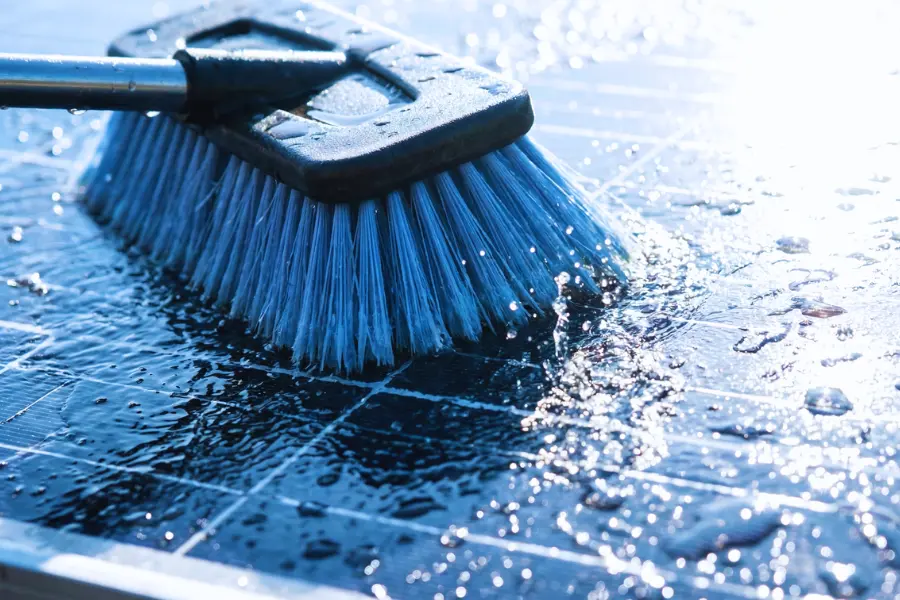
Once your solar system is installed, it is easy to forget about it. It sits on your roof, silently generating power. But like any car parked outside, your solar panels accumulate dust, pollen, bird droppings, and smog. The question is: does this layer of grime actually affect your power output enough to matter?
A new industry of “Solar Cleaning Professionals” has popped up, charging homeowners anywhere from $150 to $300 per visit. Are they providing a valuable service, or just spraying expensive water on your roof?
The Science of “Soiling Loss”
Engineers have a term for dirty panels: Soiling Loss. In most climates, NREL (National Renewable Energy Laboratory) estimates typical annual soiling loss at around 3% to 5%.
This means if your system is supposed to generate $2,000 worth of electricity a year, a 5% loss equals $100. If you pay someone $200 to clean them, you have mathematically lost money on the deal.
When Cleaning IS Necessary
While most homeowners can rely on rain, there are specific scenarios where professional cleaning is mandatory:
- No Rain for 6+ Months: If you live in Arizona or Southern California during a drought, dust buildup can reach 10-15%. Cleaning is required here.
- Flat Panels: Most residential panels are tilted, allowing rain to wash dirt off. If your panels are flat (0-degree tilt), water pools and leaves mud residue.
- Bird Droppings: This is the enemy. A single large bird dropping can create a “hotspot” that not only blocks light but can damage the cell permanently.
DIY Cleaning: The Do’s and Don’ts
If you decide to clean them yourself to save the $200 fee, be careful. You can easily damage the anti-reflective coating on the glass.
DO:
- Use plain water or a very mild, biodegradable soap.
- Use a soft sponge or a non-abrasive brush.
- Clean early in the morning when panels are cool.
DON’T:
- NEVER use a pressure washer. High pressure can force water into the seals and destroy the panel.
- Do not use harsh chemicals like Windex or bleach.
- Do not spray cold water on hot panels in the middle of the day (thermal shock can crack the glass).
Safety Disclaimer
Always prioritize safety. If your roof is steep or high, do not attempt DIY cleaning. Hiring a professional with insurance is safer than risking a fall.